My mother’s sixty-fifth birthday was supposed to be simple.
Family.
Dinner.
Cake.
No speeches longer than five minutes.
That was what Mom wanted.
Her name was Helen Whitmore, and after raising two children, caring for our father through cancer, and spending nearly thirty-two years inside the same Virginia home, she had become tired of large celebrations.
“Just dinner,” she told me.
“No rented ballroom. No surprise band. No hundred people pretending they remember my birthday.”
So I promised.
There were fourteen adults around the dining table that evening.
My mother.
My sister Vanessa.
Vanessa’s fiancé, Grant.
My wife Caroline.
Several cousins.
Two family friends.
And me.
The house looked almost exactly as it had when I was a teenager.
Dark oak staircase.
Cream walls.
A crystal chandelier Dad insisted was “too expensive” until Mom bought it anyway.
The dining table still had the small knife mark I made while building a model airplane when I was twelve.
This wasn’t simply real estate.
It was the center of our family history.
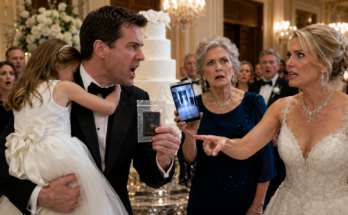
Which was why I couldn’t understand what Vanessa was doing when she walked into the dining room carrying Mom’s navy suitcase.
Mom noticed first.
“Why do you have my bag?”
Vanessa placed it beside her chair.
“We need to talk before dessert.”
My sister was thirty-seven.
Beautiful.
Successful-looking.
And very good at speaking as though every decision had already been made before anyone else entered the conversation.
Mom frowned.
“About what?”
Vanessa picked up her wine.
“The house.”
I looked at her.
“What about it?”
She ignored me.
“Mom, Grant and I have been discussing the property.”
My mother laughed softly.
“Why?”
“Because this isn’t sustainable anymore.”
“What isn’t?”
“You living here.”
Silence moved across the table.
Mom appeared genuinely confused.
“I’ve lived here for thirty-two years.”
“I know.”
Vanessa said it as though that were the problem.
“The house is almost seven thousand square feet. Taxes are high. Maintenance is ridiculous.”
“I pay them.”
“That’s not the point.”
“Then what is?”
Vanessa pushed her chair backward.
She stood.
Then she picked up Mom’s suitcase.
And threw it across the polished floor.
Not violently enough to hurt anyone.
But deliberately enough that nobody could mistake the gesture.
The bag slid several feet and stopped beside the dining-room doorway.
“Take your things and get out.”
My wife gasped.
I stood immediately.
“Vanessa.”
She pointed toward me.
“Sit down, Michael.”
“No.”
“This doesn’t concern you.”
“It concerns me when you’re throwing Mom out of her own house.”
Vanessa smiled.
That smile bothered me more than her shouting.
“Her house?”
Mom stared at her.
“Yes. My house.”
Vanessa took a document from her handbag.
“Dad left this property to me.”
Nobody spoke.
Mom blinked several times.
“What?”
“You heard me.”
Vanessa placed the document on the table.
“I have been allowing you to stay here because you were grieving. But Grant and I are getting married. We have plans for the property.”
My mother didn’t reach for the paper.
She looked hurt.
Not because of the house.
Because of the person saying it.
“Your father left this to you?”
“Yes.”
“When?”
“In his estate plan.”
“That isn’t what he told me.”
“Dad protected you from financial details.”
Mom almost smiled.
“Your father couldn’t hide a grocery receipt from me.”
Several relatives looked down, trying not to react.
Vanessa’s jaw tightened.
“You’ve never understood the estate.”
I stepped closer.
“I was at the will reading.”
“So?”
“I don’t remember you receiving the house.”
“Because the transfer wasn’t handled through the will.”
That part was technically possible.
Properties could be transferred through deeds or trusts separately from probate.
Vanessa knew enough legal language to sound convincing.
And that was dangerous.
Mom finally picked up the paper.
Her hands trembled.
I walked around the table and stood beside her.
The document looked official.
It referenced the mansion.
Our father’s name.
Vanessa’s name.
A transfer.
Mom read it twice.
“Why didn’t Robert tell me?”
That was the first moment Vanessa looked uncomfortable.
Robert Hale had been our father’s attorney for more than twenty years.
He handled most of the family estate planning.
Vanessa answered:
“Robert isn’t involved anymore.”
Mom looked up.
“Since when?”
“Since Dad died.”
“That isn’t true.”
“It doesn’t matter.”
“It matters if you’re using his legal documents.”
Vanessa rolled her eyes.
“Mom, this is exactly why we need to do this now.”
“Do what?”
“Move you somewhere manageable.”
My mother looked at the suitcase.
“You packed my clothes?”
“A few things.”
“Without asking?”
“We already found a senior community.”
The room went silent again.
My mother’s expression changed completely.
“You found me a senior community.”
“It’s beautiful.”
“I’m sixty-five, Vanessa.”
“And alone.”
Mom sat straighter.
“That is not a medical condition.”
Grant finally spoke.
“Helen, nobody is trying to insult you.”
I turned toward him.
“You should probably stay out of this.”
He looked offended.
Vanessa snapped:
“Grant is going to be my husband. He has every right to be involved.”
“In Mom’s house?”
“In my house.”
That sentence had barely left her mouth when the front door opened.
A moment later, our housekeeper led someone toward the dining room.
Robert Hale.
He wore a dark gray suit and carried a thick cream-colored folder.
He was fifty-eight, serious, and normally impossible to surprise.
But when he saw Mom’s suitcase lying near the dining room, his expression changed.
“Helen?”
Mom stood.
“Robert?”
He looked around.
“I’m sorry to interrupt.”
Vanessa looked irritated.
“Why are you here?”
Robert did not answer her immediately.
He looked at Mom.
“Did you authorize a sale of this property?”
Mom stared at him.
“No.”
Vanessa suddenly stopped moving.
I noticed.
Robert did too.
Mom asked:
“What sale?”
Robert closed his eyes briefly.
“That answers my first question.”
Vanessa stepped forward.
“There isn’t any sale.”
Robert looked at her.
“You’re telling Helen the house belongs to you?”
Vanessa folded her arms.
“It does.”
Robert glanced at the paper on the table.
“May I?”
Mom handed it to him.
Robert read the first page.
Then the second.
He did something unexpected.
He smiled.
Not because anything was funny.
Because he recognized exactly what he was looking at.
“Vanessa, where did you get this?”
“Dad’s files.”
“This is a draft.”
“No, it isn’t.”
“Yes.”
Robert opened his cream folder.
“The proposed transfer was prepared nine years ago when your father considered moving the house into a family trust.”
Vanessa’s face tightened.
Robert continued.
“He changed his mind.”
Mom whispered:
“I remember.”
Everyone looked at her.
She nodded slowly.
“Daniel wanted the house protected if something happened to both of us.”
Robert said:
“Correct.”
Then he pulled out another document.
“Six years before Daniel died, he executed a new deed.”
Robert placed it in front of Mom.
“The property was transferred entirely to Helen Whitmore.”
My sister stared at him.
“No.”
Robert looked at her.
“Yes.”
“She doesn’t own all of it.”
“She does.”
“That isn’t what Dad told me.”
“Then either you misunderstood your father or you’re lying about what he said.”
Vanessa’s face flushed.
Grant stepped beside her.
“This can be resolved privately.”
Robert looked at him.
“You might not want privacy yet.”
Grant became still.
Robert turned to Mom.
“I came because three days ago I received a call from Jefferson Title.”
I had never heard of the company.
Mom hadn’t either.
“They were preparing closing documents for a private sale of this house.”
My mother grabbed the back of her chair.
“What?”
“The stated purchase price was $2.4 million.”
Vanessa shook her head.
“This has nothing to do with me.”
Robert continued.
“The seller was listed as Helen Whitmore.”
Mom whispered:
“I haven’t signed anything.”
“I know.”
“How?”
“Because the signature on the documents doesn’t match the signatures in my files.”
Robert paused.
“And because the power of attorney authorizing the transaction is false.”
Vanessa stepped backward.
I looked at her.
That movement told me more than any denial.
Mom saw it too.
“Vanessa?”
My sister shook her head.
“No.”
Robert opened another section of the folder.
“The document claims you signed the power of attorney four months ago.”
Mom thought for a moment.
“I was recovering from surgery.”
Exactly.
Mom had undergone hip surgery that spring.
Vanessa stayed with her for nearly three weeks.
At the time, everyone praised her.
She handled medications.
Insurance calls.
Mail.
Appointments.
Financial correspondence.
I visited almost every evening, but Vanessa spent more time inside the house than anyone.
Then I remembered something.
“Mom.”
She looked at me.
“Didn’t Vanessa bring you paperwork to sign after the surgery?”
My sister turned toward me.
“Don’t start.”
Mom’s expression changed.
“Yes.”
“What paperwork?”
“She said some were insurance forms.”
Vanessa snapped:
“They were.”
Robert asked calmly:
“Did you read everything?”
Mom looked embarrassed.
“No.”
“You were taking pain medication.”
“Yes.”
Vanessa crossed her arms.
“There. She admits she doesn’t remember.”
Robert looked at her.
“That’s not helping you.”
Grant moved toward the hallway.
Robert noticed.
“Mr. Collins.”
Grant stopped.
“You may want to remain.”
“Why?”
“Because Whitmore Property Solutions lists an address connected to you.”
The color left Grant’s face.
Vanessa stared at him.
Then at Robert.
“What are you talking about?”
Robert removed another page.
“The buyer was instructed to send proceeds from the property sale into a newly established entity called Whitmore Property Solutions.”
I asked:
“Who owns it?”
Robert looked directly at Grant.
“Officially, another LLC.”
Grant said nothing.
Robert continued.
“But that LLC uses Mr. Collins’s business address, accountant, and registered contact number.”
Mom looked at Vanessa.
“Were you selling my home?”
“No.”
“Then why is your fiancé connected to the company receiving the money?”
“I’m not.”
Grant finally spoke.
“Vanessa handled the paperwork.”
My sister turned toward him.
“What?”
“I didn’t create the power of attorney.”
“You coward.”
“You told me your mother had agreed!”
Guests began whispering.
Vanessa’s face became furious.
“Shut up.”
Grant stepped away.
“No. You said Helen wanted to downsize.”
“She does!”
Mom’s voice cut through them.
“No, I don’t.”
The room went quiet.
Vanessa looked at her mother.
“Mom, you’re being emotional.”
That sentence was a mistake.
I saw it immediately.
So did Robert.
My mother’s expression changed.
For most of the confrontation, she had been hurt.
Now she became calm.
Dangerously calm.
“I am emotional.”
Vanessa opened her mouth.
Mom continued.
“My daughter packed my suitcase, told me I didn’t own the home I’ve lived in for thirty-two years, apparently arranged to sell it, and now says I’m too emotional to understand.”
Vanessa said nothing.
Robert placed another document on the table.
“There is more.”
My stomach sank.
“A $75,000 advance was already issued by the prospective buyer.”
Mom looked at him.
“To whom?”
“Whitmore Property Solutions.”
Vanessa’s face went white.
Robert continued.
“The money was deposited six days ago.”
Grant closed his eyes.
“Where is it?” I asked.
Robert looked at Vanessa.
“Based on records the title company provided, portions were used almost immediately.”
“For what?”
He turned the page.
“Credit cards.”
Vanessa said:
“This is private.”
Robert ignored her.
“A vehicle loan.”
Grant looked down.
“And several payments associated with the wedding venue Vanessa and Grant reserved for November.”
The room became completely silent.
My mother stared at her daughter.
“You used money from selling my house to pay for your wedding?”
Vanessa’s eyes filled with tears.
Finally.
But they were not the same tears Mom had.
“These were temporary expenses.”
Mom almost laughed.
“Temporary?”
“We were going to replace it.”
“With what?”
“The sale.”
“My sale?”
Vanessa raised her voice.
“You don’t need this house!”
Nobody moved.
There it was.
The truth underneath every legal explanation.
She believed she deserved it.
Vanessa continued.
“You live here alone! Do you know what this property is worth? You have retirement accounts. Investments. Dad left you everything.”
Mom looked at her.
“Your father left you nearly eight hundred thousand dollars.”
“That money is gone.”
The words escaped Vanessa before she could stop them.
Robert’s eyebrows lifted.
Mom whispered:
“Gone?”
Vanessa looked away.
Grant answered.
“Investments.”
My sister turned toward him.
“I said stop talking.”
He shook his head.
“You invested in what?”
Vanessa wouldn’t answer.
Grant did.
“A hospitality project.”
Robert frowned.
“Where?”
“Miami.”
I knew enough from his tone to understand the investment had failed.
Grant admitted they had lost most of Vanessa’s inheritance over two years.
Then credit card debt grew.
Then their wedding expenses.
Then Grant’s business began struggling.
The mansion became the solution.
Not because Vanessa legally owned it.
Because she had convinced herself she should.
Mom sat down.
For the first time, she looked older than sixty-five.
“I would have helped you.”
Vanessa looked at her.
“No, you wouldn’t.”
“You never asked.”
“You would’ve lectured me.”
“Maybe.”
Mom nodded.
“I probably would have.”
Then she looked directly at her daughter.
“But I would not have let you lose everything.”
Vanessa’s expression cracked.
Mom continued.
“You chose stealing because you preferred that to hearing me say you made a mistake.”
Grant began walking toward the door again.
Then headlights appeared outside.
Two vehicles.
One unmarked.
One police cruiser.
Vanessa looked through the window.
“What did you do?”
Robert closed the folder.
“I reported suspected property fraud after confirming Helen had not authorized the sale.”
“You called police?”
“Yes.”
Vanessa looked at Mom.
“Tell them to leave.”
Mom stared at her.
“Why?”
“I’m your daughter.”
“Yes.”
“Then protect me!”
Mom’s voice was quiet.
“I spent thirty-seven years protecting you.”
She looked at the false power of attorney.
“Perhaps that is part of the problem.”
The investigation took months.
The attempted property sale never closed.
The title company froze the transaction immediately.
The $75,000 advance became part of the financial dispute.
Some of it had already been spent.
Some was recovered.
The false documents were examined.
Investigators found electronic files on Vanessa’s computer showing multiple versions of Mom’s signature.
There were scans.
Practice pages.
Altered dates.
Emails between Vanessa and Grant discussing how quickly the sale could close.
Grant cooperated early.
He insisted Vanessa had told him Mom wanted to sell.
Evidence showed he knew far more than he first admitted.
He eventually faced his own legal consequences.
Their engagement ended before the criminal case was resolved.
Vanessa moved out of the apartment they shared.
For the first three months, she blamed everyone.
Robert.
Grant.
Me.
The title company.
Even Dad.
Mom was the only person she didn’t blame publicly.
Maybe because she knew how terrible that would sound.
The criminal charges were eventually resolved through a plea agreement involving fraud-related offenses, restitution, and probationary supervision.
The exact punishment mattered less to Mom than what happened afterward.
Vanessa was no longer allowed to manage any of her mother’s financial affairs.
Every authorization was revoked.
Mom changed banks.
Changed passwords.
Changed locks.
She hired an independent fiduciary to help monitor major transactions.
And she did something nobody expected.
She kept the house.
Everyone assumed she might sell after what happened.
She refused.
“Why should I leave?” she asked me.
I smiled.
“You shouldn’t.”
Six months after the birthday party, I visited on a Sunday afternoon.
Mom was sitting on the back porch.
The navy suitcase was beside her.
The same one Vanessa had thrown across the dining room.
I stared at it.
“Going somewhere?”
“Yes.”
“Where?”
“Italy.”
I laughed.
“Seriously?”
“Florence first. Then Rome.”
“Alone?”
She gave me a look.
“I survived your father for thirty-eight years. I think I can survive an airport.”
I sat beside her.
After a moment, she said:
“Vanessa wrote.”
I didn’t ask what the letter said.
Mom told me anyway.
“She apologized.”
“Do you believe her?”
“I believe she’s sorry.”
“Same thing?”
“No.”
That answer sounded like my mother.
She had started seeing a therapist after the birthday confrontation.
Not because anyone thought she was unstable.
Because betrayal leaves questions even when the legal facts are clear.
She struggled with one in particular.
“How did I raise someone who could do that?”
Her therapist apparently gave her an answer she didn’t like but needed.
Children become adults.
Adults make choices.
Parents influence them.
They do not control them.
Nearly a year later, Vanessa and Mom finally met.
Not at the mansion.
At Robert’s office.
Neutral ground.
I wasn’t there.
Mom told me about it afterward.
Vanessa cried.
She admitted that after losing most of Dad’s inheritance, shame became panic.
Every time she visited the mansion, she saw money.
Not memories.
Not family.
Equity.
She convinced herself Mom didn’t need it.
Then convinced herself Dad would’ve wanted her to have it.
Then convinced herself that signing Mom’s name was simply speeding up an inevitable decision.
That was how the lies worked.
One justification at a time.
Mom listened.
Then asked:
“Why did you throw my suitcase?”
Vanessa cried harder.
She didn’t have a legal explanation for that.
Because there wasn’t one.
That wasn’t fraud.
That was cruelty.
Vanessa eventually answered:
“I wanted you to feel like you had no choice.”
Mom nodded.
“That’s the part I needed to hear.”
Their relationship did not magically heal.
Mom did not hand Vanessa a key.
She did not restore financial access.
She did not pretend nothing happened because family should forgive.
They began with phone calls.
Then coffee.
Then occasional lunches.
Boundaries first.
Trust later.
Maybe.
On Mom’s sixty-sixth birthday, we had dinner again.
Same house.
Smaller table.
No Vanessa.
Mom wasn’t ready.
After cake, she walked toward the dining-room doorway.
She stopped where the suitcase had landed the year before.
I noticed.
“You okay?”
She smiled.
“Yes.”
Then she looked around the house.
The chandelier.
The staircase.
The family photographs.
Thirty-three years of memories now.
“Your father used to say this place was too big.”
“He wasn’t wrong.”
“No.”
She laughed.
“But he also knew something.”
“What?”
“A home isn’t valuable because someone can sell it.”
She looked toward the photographs.
“It’s valuable because people should feel safe inside it.”
That was what Vanessa had nearly taken.
Not the property.
Not $2.4 million.
Safety.
The certainty that Mom could close her own front door and know nobody else had the right to remove her.
Vanessa thought throwing that suitcase proved who held the power.
She was wrong.
The deed proved ownership.
The investigation proved fraud.
But Mom proved something else.
She could lose trust in her daughter without losing herself.
That birthday began with Vanessa pointing toward the front door and saying:
“Take your things and get out.”
It ended with the police walking through that same door.
And my mother staying exactly where she belonged.
In her own home.