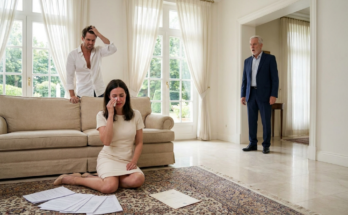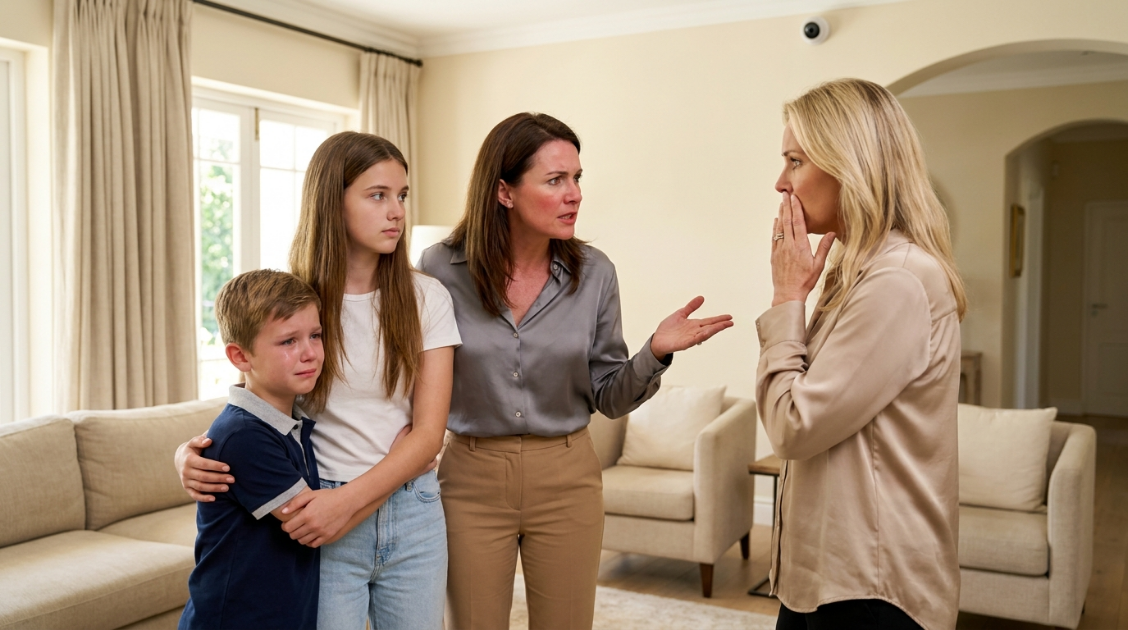
I came home and found my nine-year-old son sobbing in the living room while my sister-in-law held him by the shoulders.
My daughter Ava was standing between them.
“Let him go!”
Claire turned toward me.
“Rebecca, thank God. Your son is completely out of control.”
Noah’s face was soaked with tears.
“I didn’t do anything.”
I walked straight toward them.
“Take your hands off him.”
Claire released him.
Noah immediately moved behind Ava.
My name is Rebecca Lawson.
I have two children.
Ava is sixteen.
Noah is nine.
Their father, Daniel, was away on a three-day business trip.
My sister-in-law Claire had been staying with us for about six weeks.
She was Daniel’s older sister.
Her marriage had fallen apart suddenly.
She called us crying and asked whether she could stay until she found an apartment.
I said yes.
I had known Claire for almost twenty years.
She could be dramatic.
Competitive.
Sometimes judgmental.
But I never imagined she would deliberately hurt my children emotionally.
At first, everything seemed normal.
Claire helped cook.
She drove Noah to soccer.
She watched television with Ava.
Then small things changed.
Noah became unusually quiet around her.
If I said I was going to the grocery store, he asked:
“Is Ava staying?”
I thought he simply preferred his sister.
Then Claire started giving me reports.
“Noah talked back today.”
“Noah lied about homework.”
“Noah was rude when I asked him to clean up.”
Nothing sounded serious.
But the frequency bothered me.
When I asked Noah, he always said:
“That’s not what happened.”
I assumed two people could remember the same argument differently.
Ava started defending him.
“Mom, Aunt Claire picks at him.”
Claire laughed.
“Of course you defend your brother.”
Then she started telling me Ava was enabling him.
I was tired.
Daniel was traveling more for work.
The house felt tense.
I kept thinking once Claire moved out, everything would settle.
Then came the broken bowl.
It was a decorative ceramic bowl that had belonged to Daniel’s mother.
Not extremely valuable.
But sentimental.
That afternoon, I went out to pick up groceries and prescriptions.
Ava stayed upstairs doing schoolwork.
Noah was downstairs.
Claire was in the living room.
When I returned, I heard yelling before I opened the door.
Noah was crying.
Claire had both hands on his shoulders.
Ava was standing beside him.
“Let him go!”
I stepped inside.
“What is happening?”
Claire answered immediately.
“He broke your mother-in-law’s bowl and refuses to admit it.”
Noah shook his head.
“I didn’t.”
Claire looked at me.
“He lies constantly, Rebecca. You need to stop babying him.”
Ava snapped:
“He didn’t do it.”
Claire turned toward her.
“You stay out of this.”
Ava moved closer to Noah.
“No.”
I had rarely seen my daughter that angry.
Then she looked at me.
“Mom, check the camera.”
The camera.
We had installed a small indoor security camera months earlier.
It faced the front door and part of the living room.
Mostly we used it for package deliveries and when the kids came home before us.
I opened the app.
Claire immediately said:
“This is ridiculous.”
I ignored her.
I rewound the footage.
There was Claire.
Alone in the living room.
She picked up the ceramic bowl.
She carried it toward the side table.
Then her elbow hit the table lamp.
The bowl slipped.
It struck the edge of the table.
A crack appeared.
Claire stared at it.
She checked the damage.
Then placed the bowl back.
Three minutes later, Noah walked into the room.
He did not touch the bowl.
Claire called him over.
The camera had audio.
“Did you break this?”
“No.”
“You were in here earlier.”
“No, I wasn’t.”
“Stop lying.”
Noah became confused.
Then upset.
Claire kept pushing.
Finally he began crying.
Ava came downstairs.
The argument escalated.
But then the footage captured something that had nothing to do with the bowl.
Claire leaned toward Noah and said:
“Your mother always believes Ava first. Maybe if you admit you’re the problem, she’ll finally stop pretending this family is perfect.”
I stopped the video.
The room became silent.
Noah looked at the floor.
I stared at Claire.
“What does that mean?”
She said:
“I was angry.”
“Why would you tell him I think he’s a problem?”
“I didn’t mean it that way.”
Ava laughed bitterly.
“Yes, you did.”
Then she looked at me.
“Mom, she’s been doing this for weeks.”
My stomach dropped.
“Doing what?”
Ava explained.
Claire told Noah I thought he was immature.
She told him Daniel was disappointed in his grades.
Neither statement was true.
Then she told Ava that Noah was jealous because Ava received more attention.
She told Ava that Daniel thought she was selfish for not babysitting more.
Also false.
Claire had been carrying messages back and forth.
But the messages were invented.
She was creating tension.
I looked at Noah.
“Why didn’t you tell me?”
He whispered:
“I thought you really said it.”
That hurt more than anything.
I turned toward Claire.
“Why?”
She crossed her arms.
At first, she denied everything.
Then she became defensive.
She said our children were spoiled.
She said Daniel and I acted like our marriage was perfect.
I told her nobody claimed our life was perfect.
Then she said:
“You have no idea what it’s like to lose your family.”
I understood what she meant.
Her marriage had ended.
Her teenage daughter had chosen to stay with her father temporarily.
Claire felt abandoned.
But pain did not excuse what she had done.
She finally admitted she resented coming into our house and watching us function normally.
Meals together.
Kids arguing and then laughing.
Daniel kissing me goodbye.
Ava asking my opinion about school.
Noah sitting beside me on the couch.
She looked at all of it and saw something she had lost.
Then she said:
“I wanted you to know what it feels like when your family stops choosing you.”
I stared at her.
“You wanted my children to stop trusting me?”
She started crying.
“I wasn’t thinking.”
“Yes, you were.”
That was the problem.
The camera showed planning.
Not one angry sentence.
A pattern.
I told her to pack a bag.
She stared at me.
“You’re throwing me out?”
“Yes.”
“Daniel will never agree.”
I called him immediately.
He watched the video from his hotel room.
He did not argue.
He said:
“Claire needs to leave.”
She stayed with a friend that night.
The next morning, she moved the rest of her belongings.
The story could have ended there.
It did not.
After Claire left, Ava showed me screenshots.
Claire had been texting her privately.
Small comments.
“Your mom worries about Noah more because he needs more help.”
“You’re old enough to understand why she treats you differently.”
“You shouldn’t always have to protect your brother.”
Then Noah showed me messages too.
“Your sister gets away with more because your parents trust her.”
“Maybe stop trying so hard to impress them.”
Nothing looked terrible alone.
Together, it was obvious.
Claire had been dividing them.
Not dramatically.
Quietly.
A suggestion here.
A comment there.
Enough to make each child question how the rest of us saw them.
Daniel and I felt sick.
We asked both children the same question:
“Did anything else happen?”
They said no.
There had been no physical abuse.
No serious threats.
But there had been months of emotional manipulation.
That mattered.
We started family therapy.
Not because our family was broken.
Because trust had been disturbed.
Noah needed to hear directly that I did not think he was the problem.
Ava needed to hear she was not responsible for protecting him from every adult conflict.
Daniel needed to process that his sister had done this.
And I had to accept that I had dismissed warning signs because confronting them felt uncomfortable.
The therapist told us:
“Children often believe adults who speak confidently, especially when the adult claims to speak for a parent.”
That was exactly what happened.
Claire borrowed our authority.
She told them what we supposedly thought.
And they believed her.
We changed one rule immediately.
Nobody speaks for someone who is available to speak for themselves.
If Grandma says Dad is angry, ask Dad.
If Aunt Claire says Mom thinks something, ask Mom.
No intermediaries.
No secret interpretations.
Months passed.
Claire entered therapy too.
Daniel spoke with her occasionally.
I did not.
Not for a long time.
Then she wrote letters to Ava and Noah.
We read them first.
The letters were different from her earlier apologies.
No excuses.
She wrote:
“I told you things your parents never said. I did that because I was hurting and wanted other people to hurt too. It was wrong.”
That was honest.
We eventually allowed limited contact.
A short lunch with Daniel present.
Then another.
The children decided how much interaction they wanted.
Ava was cautious.
Noah was quieter.
Claire accepted it.
That mattered.
A year after the bowl incident, Daniel’s mother’s birthday came around.
We repaired the cracked bowl.
Not perfectly.
A thin line remained visible.
Noah asked why we did not just replace it.
Daniel said:
“Because the crack is part of what happened.”
I looked at him.
He smiled slightly.
The bowl became strangely symbolic.
Not because Claire broke it.
Because we stopped pretending broken things disappear when they are glued back together.
Trust can be repaired.
But the line often remains.
That is not always bad.
Sometimes the line reminds you where to be careful.
Today, Ava is preparing for college.
Noah is older and far more confident.
If someone tells him:
“Your mom thinks…”
He immediately says:
“I’ll ask her.”
That small habit makes me proud.
Claire still has a relationship with the family.
Different.
More limited.
More honest.
She rebuilt some trust through consistent behavior.
Not words.
And I learned something I wish I had understood sooner.
Manipulation rarely begins with one enormous lie.
It begins with tiny statements that are difficult to prove.
“She said this.”
“He thinks that.”
“They like you less.”
Small wedges.
Then someone keeps pushing.
The hallway camera did not save our family.
Ava did.
She stood beside her brother.
She told me to look.
The camera simply gave us evidence.
And when I think back to the moment I walked through that door, I remember Noah crying, Ava furious, and Claire certain I would believe her.
She was wrong.
But only because my daughter said four words:
“Mom, check the video.”