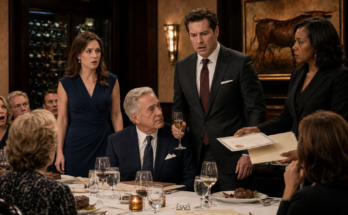
My father had been buried for twelve days when my brother announced he had sold the farm.
Not discussed selling it.
Not received an offer.
Sold it.
We were sitting around the long walnut table inside the dining room of Carter Farm.
My mother had invited us to dinner because she was tired of eating alone after Dad’s death.
There were only five people there.
Mom.
My brother Grant.
His wife Vanessa.
My husband Michael.
And me.
My name is Rachel Carter.
I was thirty-nine.
Grant was forty-four.
Carter Farm sat on 312 acres of rolling Kentucky land outside Lexington.
Our grandfather purchased the original eighty acres in 1958.
Dad expanded it slowly.
Pastures.
Horse barns.
A training track.
Woodland.
Two small tenant houses.
By the time Grant and I were adults, Carter Farm had become valuable.
Very valuable.
But to me, it wasn’t simply property.
I had worked there since college.
When other people saw green fields and expensive horses, I saw payroll deadlines.
Veterinary bills.
Broken fences.
Insurance renewals.
Feed contracts.
Staff schedules.
Grant had never liked farm operations.
He liked development.
Deals.
Investments.
Big numbers.
That evening, halfway through dinner, Grant pushed his chair back.
“I have news.”
Mom looked exhausted.
“Good news?”
“I think so.”
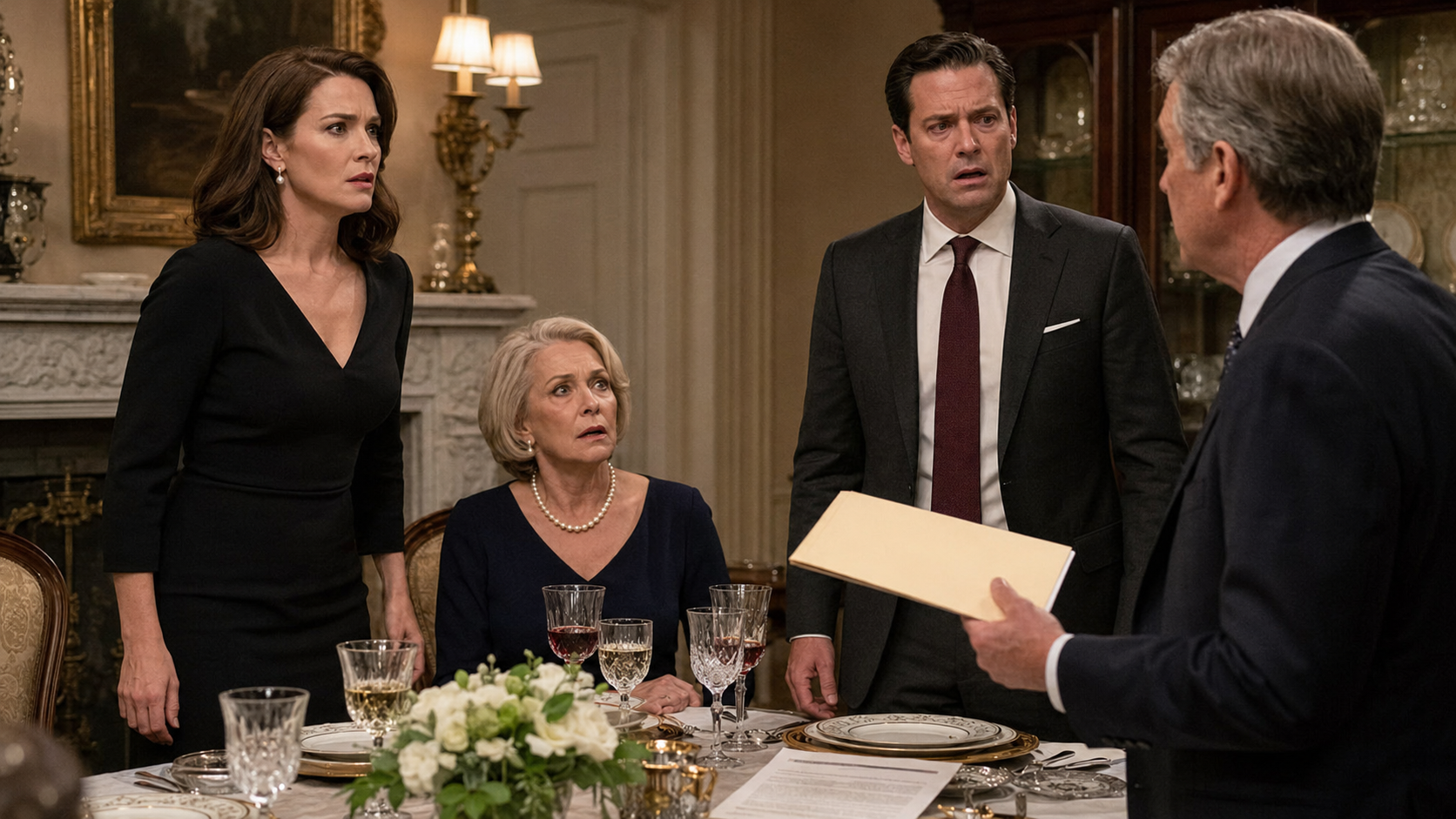
He reached into his briefcase and removed a thick contract.
Then dropped it onto the table.
“Carter Farm has been sold.”
For several seconds, nobody reacted.
I honestly thought he meant one of the smaller parcels Dad had considered selling years earlier.
“What part?”
Grant smiled.
“All of it.”
My fork stopped halfway to my plate.
Mom whispered:
“What?”
“Three hundred twelve acres.”
My husband looked at me.
I looked at Grant.
“You sold the farm?”
“Yes.”
“To whom?”
“Blue Ridge Communities.”
I knew the company.
They developed high-end residential neighborhoods.
“What exactly did they buy?”
Grant looked amused.
“The land, Rachel.”
“Which land?”
“All of it.”
Mom slowly put down her napkin.
“This house?”
“Yes.”
“The barns?”
“Yes.”
“My garden?”
Grant sighed.
“Mom, it’s a property sale.”
She stared at him.
“You sold my home?”
“I found you a condominium.”
Nobody spoke.
Mom looked almost physically struck.
“A condominium.”
“Near town. Two bedrooms. Elevator. Much easier.”
“I never asked for easier.”
Grant’s patience disappeared.
“This place is too much for you.”
“I don’t run the farm.”
He pointed at me.
“Exactly. Rachel does everything.”
I folded my arms.
“Yes.”
“That isn’t sustainable.”
“For whom?”
Grant looked at me.
“This is exactly why I didn’t tell you until the deal was done.”
My husband said:
“That doesn’t sound like a defense.”
Grant ignored him.
I asked:
“What price?”
“Eight point four million.”
Even I went quiet.
The number was substantial.
But Carter Farm wasn’t simply open land.
It included water rights.
Conservation restrictions.
Breeding facilities.
Long-term leases.
And multiple ownership interests.
Something about the whole claim made no sense.
“Who signed the contract?”
“I did.”
“On whose authority?”
Grant laughed.
“I’m executor.”
“No.”
“Yes.”
“Being executor of Dad’s estate doesn’t make you owner of everything Dad ever touched.”
Grant’s smile hardened.
“Dad left me the farm.”
Mom frowned.
“He did?”
Grant turned toward her.
“You were at the estate meeting.”
“I was grieving.”
“The documents were clear.”
I looked at him.
“I read Dad’s will.”
“So?”
“It never says you inherit Carter Farm.”
“Because ownership was handled outside the will.”
Technically, that was possible.
Dad used trusts and separate entities for several assets.
But I knew the farm’s structure better than Grant did.
At least I thought I did.
I had been signing operating documents for years.
I asked:
“What happens to the employees?”
Grant shrugged.
“Blue Ridge will handle that.”
“What does that mean?”
“They’re developing the land.”
Mom looked up.
“Developing?”
Grant hesitated.
I stared at him.
“What exactly are they building?”
“A residential community.”
My stomach dropped.
“How much of the farm?”
“Most of it.”
Mom whispered:
“The barns?”
Grant didn’t answer.
She asked again.
“The barns?”
“Yes.”
She closed her eyes.
My father had built the oldest barn with his own father.
Dad’s initials were still cut into one beam.
Mom looked at Grant.
“You sold it knowing they would tear it down?”
“Mom, buildings aren’t people.”
“No.”
Her voice was quiet.
“But people should still be consulted before you sell the place where they live.”
Grant became irritated.
“You’re being emotional.”
That sentence was enough for me.
I stood.
“You never asked Mom.”
“She doesn’t own controlling interest.”
“You never asked me.”
He laughed.
“Why would I?”
“Because I operate the farm.”
“You’re an employee.”
I stared at him.
“Excuse me?”
“You’ve always confused working here with owning it.”
My husband slowly pushed his chair back.
He knew me well enough to recognize when I was becoming angry.
Grant continued.
“Dad left the farm to me because he knew I could make difficult decisions.”
Mom looked at him.
“Your father never said that.”
“He didn’t have to.”
I asked:
“Show me.”
“What?”
“The ownership document.”
He tapped the contract.
“It’s all in there.”
“No. Show me where Dad gave you the farm.”
Grant’s face tightened.
“I don’t need to prove anything to you.”
“You do if you’re selling property I manage.”
Then he said the sentence I remember most clearly.
“You’ll get whatever I decide you deserve.”
The room went silent.
Not whatever Dad decided.
Whatever Grant decided.
My mother looked at him differently after that.
Before anyone spoke again, the doorbell rang.
Mom’s housekeeper answered it.
A minute later, Daniel Price entered the dining room.
Dad’s attorney.
He was fifty-nine and had represented our family for nearly twenty-three years.
He carried a cream folder.
“I’m sorry to interrupt.”
Grant immediately looked annoyed.
“Daniel?”
Daniel noticed the contract on the table.
Then Mom’s expression.
“What happened?”
Mom answered.
“Apparently I’ve sold my home.”
Daniel looked confused.
“What?”
Grant crossed his arms.
“I finalized the Blue Ridge deal.”
Daniel became very still.
“You finalized what?”
“Carter Farm.”
“All of it?”
“Yes.”
Daniel looked at me.
“Rachel, did you sign?”
“No.”
Grant snapped:
“She didn’t need to.”
Daniel turned toward him.
“Yes.”
Grant frowned.
“Yes what?”
“She absolutely needed to.”
My brother laughed.
“I am executor of Dad’s estate.”
Daniel placed the cream folder on the table.
“That gives you authority over estate assets.”
“Exactly.”
“Carter Farm is not wholly an estate asset.”
The room became silent.
Grant’s face changed slightly.
“What are you talking about?”
Daniel opened the folder.
Six years earlier, Dad had reorganized ownership.
I knew there had been restructuring.
I did not know the percentages.
Dad had been worried after Grant’s first business collapsed.
My brother lost almost $700,000 in a failed restaurant-development project.
He nearly filed bankruptcy.
Dad became obsessed with protecting the farm from future family liabilities.
Daniel pulled out the recorded deed and ownership agreement.
“William retained twenty percent.”
He pointed toward Mom.
“Helen received twenty.”
Then he looked at me.
“Rachel received sixty.”
I stared at him.
“What?”
My husband whispered:
“Sixty?”
Daniel nodded.
Grant laughed.
“No.”
Daniel pushed the document toward him.
“You signed acknowledgment of the arrangement.”
“When?”
“Six years ago.”
“I would’ve remembered.”
Daniel pulled out another page.
There was Grant’s signature.
My brother’s face drained of color.
He stared at it.
Then at Dad’s signature.
Then mine.
I suddenly remembered.
Dad had called us into his office after Grant’s business failure.
There were documents.
A discussion about asset protection.
Grant had barely listened.
He was furious because Dad refused to lend him more money.
I had signed where Daniel instructed.
Dad later told me:
“You’re responsible for keeping this place alive.”
I assumed he meant operationally.
Apparently he meant something more.
Grant looked at me.
“You knew.”
“No.”
“Don’t lie.”
“I knew Dad transferred ownership. I didn’t know it was sixty percent.”
“You expect me to believe that?”
Daniel answered:
“Yes.”
Grant turned.
“How would you know?”
“Because William specifically asked me not to emphasize percentages until after his death unless necessary.”
“Why?”
Daniel looked at my brother.
“He didn’t want ownership becoming another competition between you.”
That sounded exactly like Dad.
Grant pushed the document away.
“It doesn’t matter.”
Daniel stared.
“It matters quite a lot.”
“The sale contract is signed.”
“By you.”
“Yes.”
“For interests you do not own.”
Grant’s face tightened.
“I have Dad’s twenty percent.”
“Possibly, subject to administration.”
“And Mom’s.”
Mom immediately said:
“No.”
Grant looked at her.
“You told me I could handle things.”
“I told you to help with Dad’s estate.”
“Same thing.”
“No.”
Daniel shook his head.
“And even if Helen transferred her twenty percent tomorrow, you’d still lack Rachel’s sixty.”
Grant looked toward me.
I didn’t say anything.
Then Daniel asked:
“Where is the deposit?”
Grant froze.
“What deposit?”
That was when I knew something worse was happening.
Daniel closed one part of the folder and opened another.
“Blue Ridge wired a $280,000 earnest-money payment.”
Mom stared at Grant.
“You already took money?”
Grant shook his head.
“The company paid a deposit.”
“To whom?” I asked.
“It doesn’t matter.”
Daniel answered.
“Yes, Rachel. It does.”
He placed a bank confirmation on the table.
“The wire went to Carter Land Management LLC.”
I knew the name of almost every farm entity.
That wasn’t one.
“Who owns it?”
Daniel looked at Grant.
“Your brother.”
My stomach tightened.
Grant stood.
“That company was created for the transaction.”
“Why?”
“To hold proceeds.”
“Why wouldn’t proceeds go to the farm entity or closing escrow?”
Grant didn’t answer.
Daniel continued.
“Because Grant instructed Blue Ridge to send the deposit directly.”
Mom asked:
“Where is the money now?”
My brother grabbed his water glass.
“Still there.”
Daniel looked at him.
“No.”
Grant stopped.
“Excuse me?”
“The bank flagged unusual outgoing transactions.”
“How would you know?”
“Because Blue Ridge’s closing attorney called me when title review showed your ownership representation didn’t match public records.”
Daniel tapped the folder.
“And because your bank contacted the estate after seeing William Carter referenced as beneficial owner on supporting documents.”
Grant sat down.
Nobody needed Daniel to continue.
But he did.
Approximately $90,000 had already left the account.
A commercial-loan payment.
Credit cards.
An overdue vehicle payment.
Another transfer to one of Grant’s failing businesses.
Mom stared at her son.
“You spent the buyer’s money?”
“It was temporary.”
I closed my eyes.
There was that word again.
Temporary.
Grant continued.
“My company was waiting for a receivable.”
I asked:
“So you sold property you didn’t own to cover your business debt?”
“I negotiated a deal.”
“You forged my authority?”
His face changed.
That answer came later.
Daniel pulled out another document.
A written authorization supposedly giving Grant the right to negotiate Rachel’s interest.
The signature at the bottom looked like mine.
Very much like mine.
But I hadn’t signed it.
I stared at the page.
“Where did this come from?”
Grant shook his head.
“That was included in the records.”
“Who included it?”
“I don’t remember.”
I laughed once.
“You don’t remember?”
Daniel said:
“Blue Ridge received it from Grant’s office.”
My brother’s face hardened.
“Someone on staff must have—”
“Stop.”
I rarely yelled.
That word came out louder than I expected.
Grant went quiet.
I looked directly at him.
“Did you sign my name?”
“No.”
“Did you tell someone else to?”
“No.”
“Then why does a company buying my property have a document I never signed?”
He couldn’t answer.
Mom started crying.
That changed everything for me.
Until then, the situation felt like a business crisis.
Fraud.
Ownership.
Contracts.
Money.
Then I saw Mom.
She wasn’t crying over $8.4 million.
She was looking through the dining-room window at the barn where Dad spent half his life.
Grant had treated her home like inventory.
She asked him:
“Were you really going to let bulldozers come here?”
Grant looked frustrated.
“Mom.”
“Answer me.”
“It wouldn’t happen immediately.”
She stared at him.
That might have been the worst answer possible.
Not no.
Not I would have stopped it.
Just not immediately.
Mom wiped her face.
“Did you plan to tell me before closing?”
Grant looked down.
She nodded slowly.
That was her answer.
Daniel wasn’t finished.
He had printed an email chain.
Grant had promised Blue Ridge that “family occupancy issues” would be resolved before closing.
One executive asked:
What about your mother and sister?
Grant replied:
Rachel will be out of the way. Mom will relocate.
My husband read the email twice.
Then handed it to me.
I felt almost nothing.
That frightened me.
Anger would have been easier.
Instead, I felt finished.
Not with the farm.
With Grant’s explanations.
I asked:
“How exactly was I going to be out of the way?”
He shook his head.
“It was sales language.”
“Meaning?”
“Meaning I would handle you.”
I laughed softly.
“You couldn’t even handle the deed.”
Grant stood again.
“Fine. You want the deal dead? Kill it.”
Daniel answered:
“It is already suspended.”
Grant looked at him.
“Blue Ridge won’t walk away from this property.”
“They may not.”
“So renegotiate.”
Rachel—that’s me—looked at Mom.
She shook her head before I even asked.
“No.”
Grant stared.
“Mom.”
“No development.”
“You don’t control that.”
She pointed toward me.
“She does.”
Grant looked at me.
“No.”
For the first time that night, I understood what sixty percent meant.
Not money.
Authority.
Responsibility.
Dad had placed the future of Carter Farm in my hands.
I looked at Daniel.
“Can I stop the transaction?”
“Yes.”
“Then stop it.”
Grant slammed his palm on the table.
“You’re throwing away millions!”
I turned toward him.
“No.”
“What do you call rejecting eight million dollars?”
“Keeping what isn’t for sale.”
He laughed bitterly.
“You always wanted Dad to pick you.”
I looked at him.
“This isn’t about Dad picking anyone.”
“Yes, it is.”
“No.”
I pushed the forged authorization toward him.
“This is about you deciding our consent was inconvenient.”
He said nothing.
The sale collapsed within days.
Blue Ridge demanded its deposit back.
That became difficult because Grant had spent part of it.
Their attorneys threatened civil action.
Then the signature issue became a separate matter.
We cooperated fully.
The financial investigation expanded.
Grant eventually admitted creating Carter Land Management specifically to receive funds from the sale.
He claimed an employee had prepared the authorization using documents from old farm files.
Investigators found metadata tying the file to Grant’s laptop.
His story changed.
Then changed again.
Eventually, he stopped giving interviews without counsel.
The legal process lasted more than a year.
The deposit was repaid using proceeds from the sale of Grant’s investment property and other assets.
He entered a plea agreement resolving fraud-related offenses connected to the transaction and forged authorization.
I didn’t attend every hearing.
Mom attended none.
She said:
“I buried one person I loved this year. I don’t want to sit in court watching another destroy himself.”
Grant’s marriage suffered.
His businesses mostly collapsed.
For a long time, he blamed me.
If I had sold the farm, he said, everyone would’ve had money.
If Daniel hadn’t interfered, the closing would have happened.
If Dad had divided ownership equally, none of this would have occurred.
It took nearly two years before Grant said the sentence that mattered.
“I did it.”
No qualification.
No but.
No explanation.
He said it during a meeting with Mom and me at a therapist’s office.
“I did it because I was broke and ashamed.”
Mom listened.
Grant continued.
“I knew Rachel would say no.”
I answered:
“Yes.”
“So I told myself asking was pointless.”
“That doesn’t give you permission.”
“I know.”
He looked at Mom.
“I convinced myself you wouldn’t care once you saw the money.”
Mom’s eyes filled.
“You thought money would make me forget you sold my home?”
Grant cried.
“I wasn’t thinking about it as your home.”
Mom nodded.
“I know.”
That was what hurt her.
He saw acreage.
Value.
A deal.
We saw Dad.
History.
Work.
Home.
Grant eventually asked whether he could visit the farm again.
Mom said yes.
I agreed.
But he had no financial authority.
No keys to offices.
No access to farm accounts.
No role in management.
He didn’t argue.
Trust did not return because he apologized.
That would take longer.
Maybe forever.
Three years after Dad died, Carter Farm still existed.
We changed parts of it.
Not everything had to remain frozen in the past.
We converted an unused barn into an equine-therapy center.
We placed another sixty acres into permanent conservation.
We sold twelve acres near the highway for commercial development.
Grant almost laughed when he heard.
“You sold land?”
I smiled.
“Yes.”
“And I’m the villain?”
“You missed one detail.”
“What?”
“I owned it.”
For the first time in years, he laughed too.
It was small.
But real.
Mom still lived in the farmhouse.
She eventually renovated the downstairs bedroom so she wouldn’t have to climb stairs.
The condominium Grant had chosen for her?
Someone else bought it.
She never even visited.
One evening, Mom and I sat on the porch overlooking the pasture.
Dad’s favorite mare was grazing near the fence.
Mom asked:
“Do you think your father knew this would happen?”
“No.”
“Then why give you sixty percent?”
I thought about it.
“Maybe because I stayed.”
She shook her head.
“No.”
“What?”
“Grant always thinks ownership is a reward.”
She looked at me.
“Your father knew it was a responsibility.”
That stayed with me.
Grant thought Dad had passed him over.
I thought Dad had trusted me.
Maybe both were true in different ways.
But the farm wasn’t a trophy.
It was payroll.
Taxes.
Repairs.
Staff.
Animals.
Land stewardship.
Decisions that could affect people decades after we were gone.
Dad hadn’t given me sixty percent so I could beat my brother.
He had given me sixty percent because someone had to be able to say no.
And one night, twelve days after we buried him, I did.
Grant dropped an $8.4 million sale contract on the table and announced:
“I sold the farm.”
He believed the deal was finished.
Then Daniel opened the deed.
The buyer discovered Grant did not own what he had promised.
The bank discovered the missing deposit.
Mom discovered her son had planned her relocation without asking.
And I discovered something Dad had arranged six years earlier.
I had the power to stop it.
So I did.
The farm stayed.
Grant left.
And the barns he promised a developer could demolish are still standing today.